
CALCULATEDRISK
By Bill McBridek
Punta Gorda House Prices Down 23% from Recent Peak, Austin Down 18%
Note: The Freddie Mac index is a repeat sales index using only loans purchased by Fannie and Freddie and includes appraisals. Freddie has data for all states and many cities. For house prices, I’m currently following Case-Shiller, FHFA, ICE, the NAR median prices, and this Freddie Mac index.
Freddie Mac reported that its “National” Home Price Index (FMHPI) decreased 0.15% month-over-month (MoM) on a seasonally adjusted (SA) basis in February.
On a year-over-year (YoY) basis, the National FMHPI was up 0.4% in February, down from up 0.7% YoY in January. The YoY increase peaked at 19.2% in July 2021, and for this cycle, and previously bottomed at up 1.1% YoY in April 2023. The YoY change in February 2026 is a new cycle low.
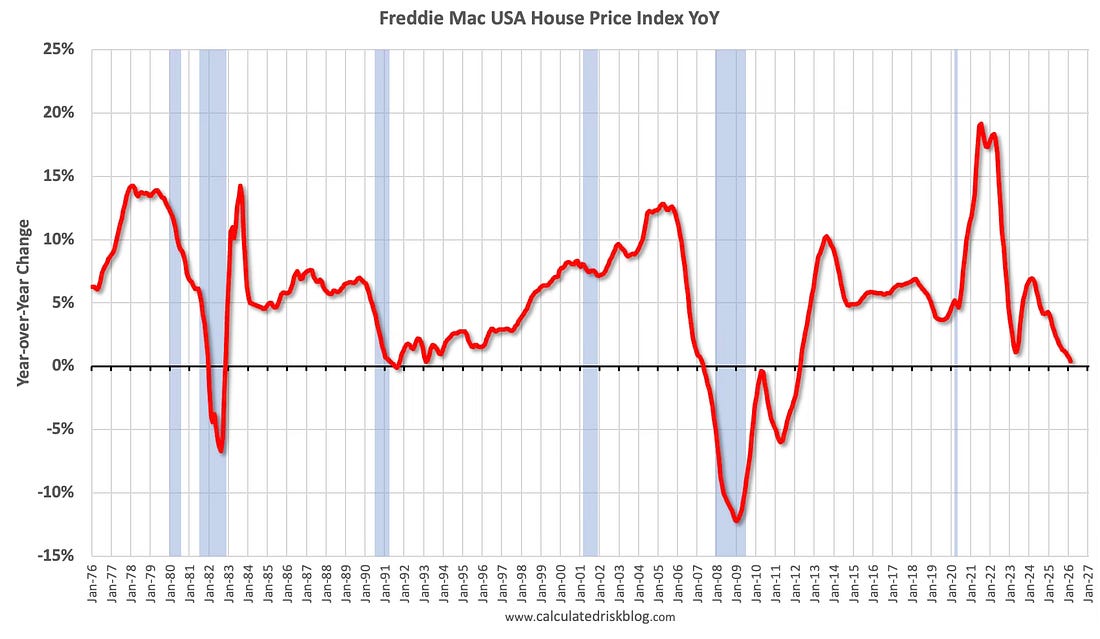
The second graph shows the month-over-month (MoM) change in the national FMHPI, seasonally adjusted.
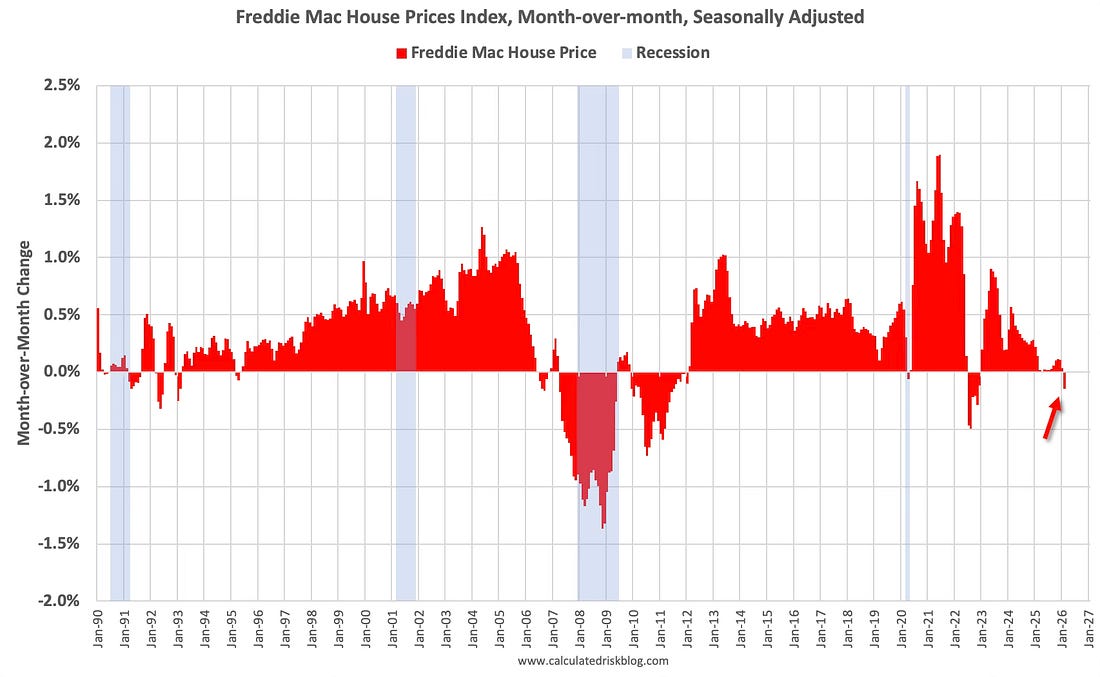
The seasonally adjusted FMHPI decreased 0.15% MoM on a seasonally adjusted (SA) basis in February. House prices are under pressure and might turn negative year-over-year sometime in 2026.
38 States and D.C. have seen price declines Seasonally Adjusted
As of February, 38 states and D.C. were below their previous peaks, Seasonally Adjusted. The largest seasonally adjusted declines from the recent peaks are in D.C. (-3.3%), Colorado (-2.8%), Washington (-2.6%), Oregon (-2.6%), Louisiana (-2.3%), and Florida (-2.3%).
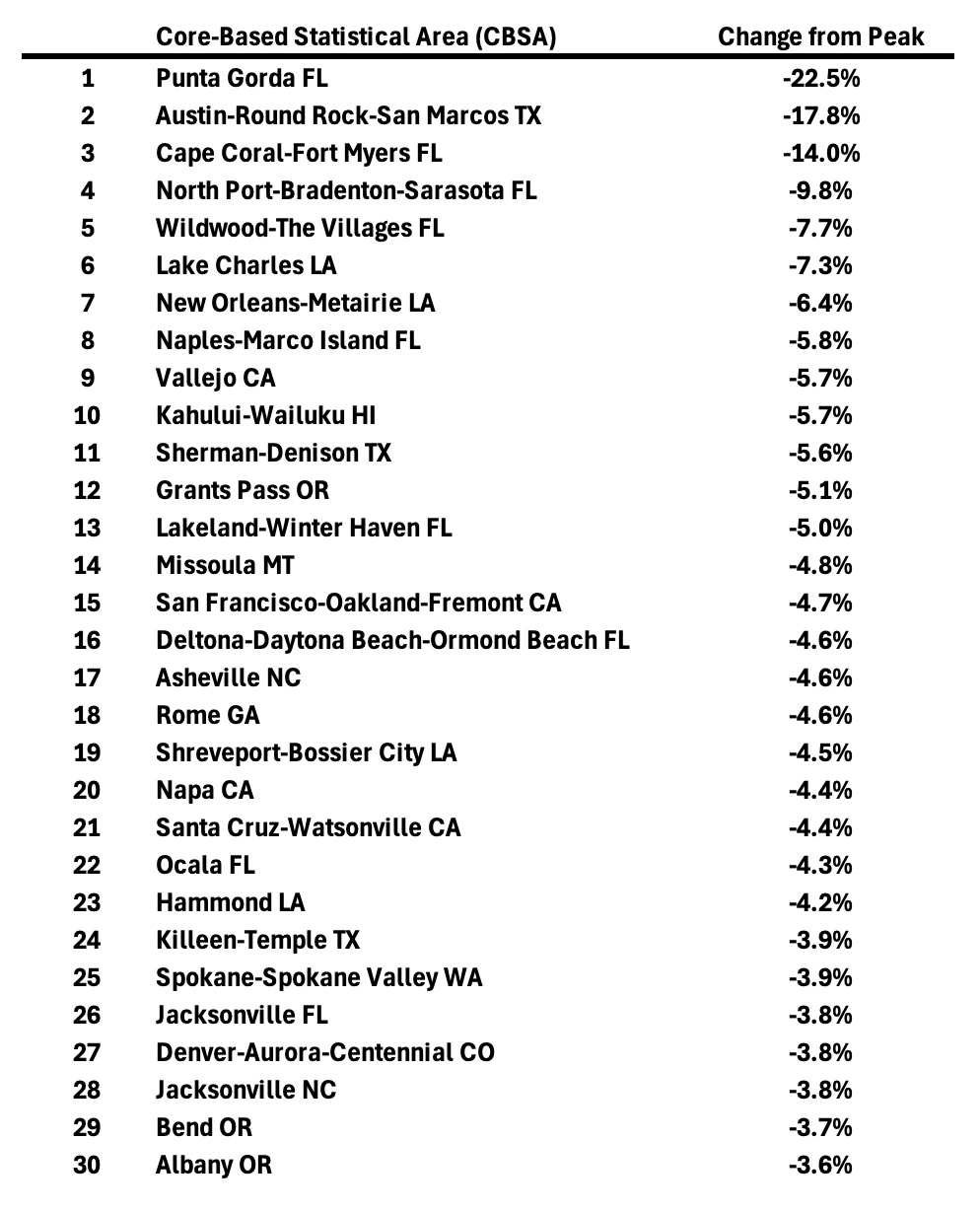
For cities (Core-based Statistical Areas, CBSA), 256 of the 387 CBSAs are below their previous peaks.
Here are the 30 cities with the largest declines from the peak, seasonally adjusted. Punta Gorda has passed Austin with the largest price decline. Note that 4 of the 5cities with the largest price declines are in Florida.
Here is a comparison of year-over-year change in the FMHPI, median house prices from the NAR, and the Case-Shiller National index.
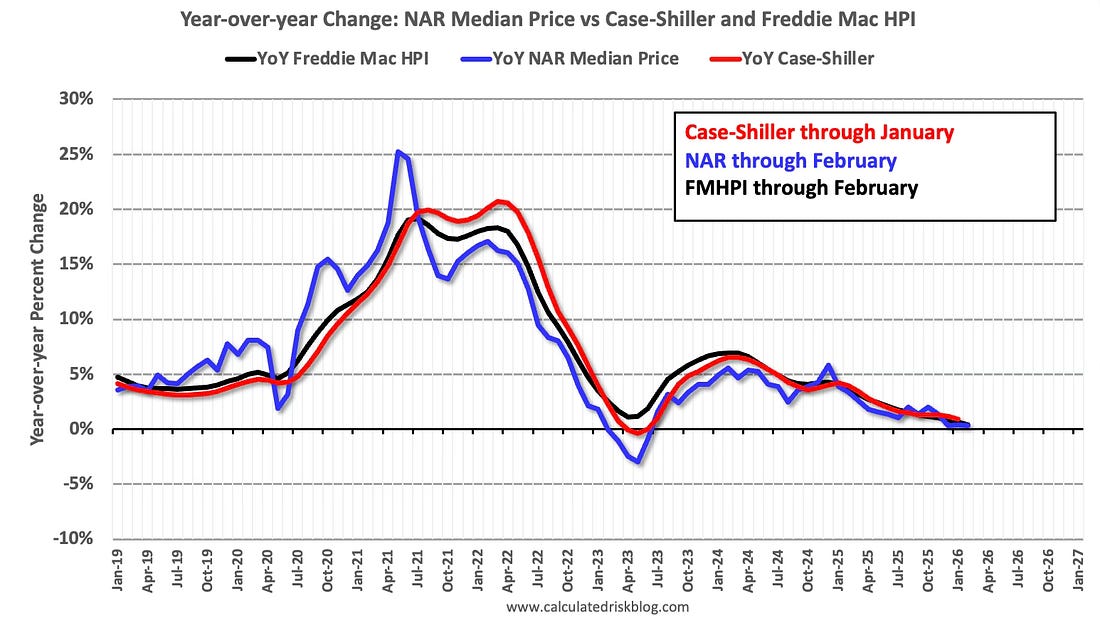
The FMHPI and the NAR median prices (up 0.3% YoY in February) appear to be leading indicators for Case-Shiller. The Case-Shiller index was up 0.9% YoY in January. The FMHPI is suggesting the Case-Shiller index will likely be up slightly less year-over-year in the February report compared to January.
Since inventory increased in 2025, while sales matched the lowest level since 1995, national house price growth (year-over-year) has slowed and might turn negative sometim